

Overcoming Identity Crisis After Hair Loss
ny woman, with or without hair is conscious of the importance society places on having, if not perfect, an identifiable head of hair. We are inundated with images of long, silky locks on models in advertisements, characters in TV shows and movies with iconic manes (think Merida from Brave), and conversations over colored hair or naturally textured hair becoming acceptable in the professional workplace (let’s keep that conversation going, ladies!). For better or for worse, we grow up believing our hair is our identity. To lose our hair in a world where hair dictates our identity can be devastating to our sense of self.
“Hair is a woman’s crowning glory.”
My hair was always the first thing about my appearance people would react to when meeting me (and it still is, but in a totally different way now!). Without putting any effort or thought in, I had straight, shiny, impossibly silky hair. I grew up with people constantly petting my head and asking to touch my hair, commenting on how soft and beautiful it was. I struggled to see it that way as it would never hold a curl, would always fall flat and shapeless no matter who attempted to cut or style it, and was difficult to dye. Nevertheless, I was known as someone with pretty hair. But neatly pretty, straight hair was the only hair I had ever had. No cute, messy buns, cool high-ponytails, or beachy waves. My image and style was perpetually inconspicuous, neat, and, not even in a trendy way, basic as a result. Hair plays such a predominant role in our perceived identity, and instead of expressing my personality and aesthetic through my hair, I unknowingly took the aesthetic forced on me by hair and struggled to fit that into my personality.
I still have two Ziploc bags full of my hair from when it first started falling out in patches. One with random clumps that fell out naturally and one with small, tied bundles from when I shaved my head. I think I knew that even with all the treatments, my hair was never coming back. I was afraid I would forget what it looked like, how it felt, and all of it’s other desirable qualities I had taken for granted. My hair had guided the person I presented to the world my whole life, and after losing it I didn’t recognize the face staring back at me in the mirror. Keeping weird bags of my own locks was my way of holding onto a sliver of the personality manufactured by that hair.
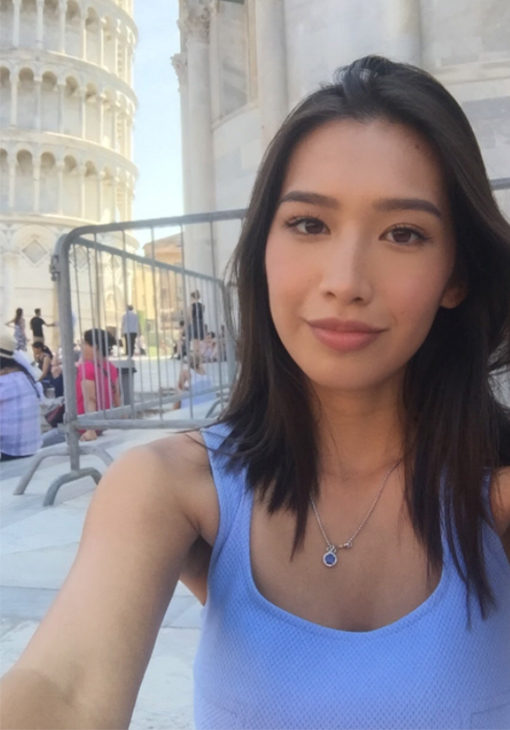
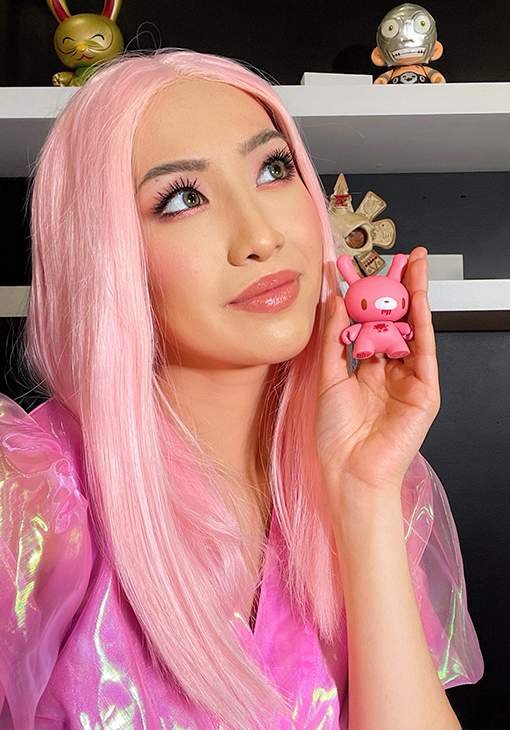
My first wigs were cheap cosplay pieces from sites like Anibiu, which I could afford with my discount code (“reneefelicity”). The few natural hair colors offered by sites like this were not remotely realistic, and human hair wigs were just not in the budget for me. I figured if I couldn’t replicate my bio hair, I might as well go for the fantasy colors I had daydreamed of dyeing my undyeable hair as a child and teenager. I thought, why not make the most of this situation and do the things I never could do with my natural hair? Luckily for me, I didn’t need to worry about strict personal appearance policies and hair color restrictions you’d find in your average professional workplace. I showed up to my minimum-wage movie theatre job in dusty blue bobs, bright orange waves, and hot-pink curls.
These cheap, plastic wigs unlocked a level of customization I had never experienced before. I could match my hair color to my mood on any given day, or change my entire look within five minutes on a whim.
With new hairstyles came the ability to pull off more clothing styles, and for the first time I actually cared about fashion. I entertained parts of my personality I had always suppressed simply because I knew my appearance wouldn’t match. I suddenly had all these options for self expression…and for the first time, being myself was fun! Or perhaps I was having fun because I could finally be myself, free from the stylistic confines shaped by my immutable bio hair.
I realized my alopecia had actually become liberating, in a way. It was an opportunity for greater self expression after years of feeling restricted to one look, which was largely defined by my hair.
While seeing alopecia as an opportunity to explore identity rather than something that erases it can be a helpful mindset, at the end of the day it is important to remember you are not your hair. The choices you make, and the grace and strength with which you will navigate the challenges associated with hair loss say more about you than the hair loss itself. You are more than the body you inhabit, and it is the little things that make you smile, your favorite song to sing in the shower, the jokes that make you laugh even on the baddest days, and the people you can’t stand to live without that make you who you are.
Leave a Reply